Tuesday, 25 August 2020

Suffolk - Peto's Marsh Walk

Our last morning on Oulton Broad and a nice walk in the opposite direction.

Setting off past Carlton Marshes, which are managed by the Suffolk Wildlife Trust. They are home to Water Voles,many species of birds and insects including 28 recorded species of Dragonfly.   Carlton Marshes lie in the Waveney Valley at the southern tip of the Norfolk Broads and is part of the Suffolk Broads. It comprises a jigsaw of grazing marsh, fens, peat pools, short fen meadow, tall fen (called 'tall litter fen'), dykes, pools and scrub.

This reserve is the Broads in miniature. Flower studded marshes drained by a system of dykes and grazed by cattle in summer, creates a paradise for marsh land birds and birds of prey including Hobby and Marsh Harrier. We were lucky to see a Marsh Harrier fly overhead.
The reserve is also one of the best sites in East Anglia to see Grasshopper Warblers. The reed and sedge beds along the river wall make ideal nesting cover for Reed and Sedge warblers, Bearded Tit and Cetti’s Warbler.

There are a few walkers and joggers out along the trails otherwise it is very quiet. There are a few noises coming from the numerous cows in the marshes.

Semi-aquatic Fen Raft Spiders were released on the site in 2012 to boost the low British population, and underwater insectivorous bladderworts trap water fleas.


Carlton Marshes


We have been on the Angles Way footpath. From Great Yarmouth the route goes by Breydon Water, along and near the River Waveney, passing around Oulton Broad, Beccles and Bungay, and Harleston and Diss, to its source, and then by the Little Ouse from its source very close by through heath-land and marsh to Knettishall Heath in the Suffolk Brecks.A total of 77 miles or 144 km.

We reach the River Waveney and discover the Ternpike Ferry. the ferry provides a welcome link to the pub, shop and other services on offer just across the river in Burgh St Peter.
The River Waveney forms the parish boundary to the south, east and northeast of Burgh St Peter, and also forms the county boundary with Suffolk.

Peto' Marsh is a newly created reed-bed.Creating this vast watery landscape of reed and pools has been a major engineering project.  Named after Sir Samuel Morton Peto I suspect who did much for the fishing industry in Lowestoft.


Suffolk weekend Part 2 Minsmere and Southwold


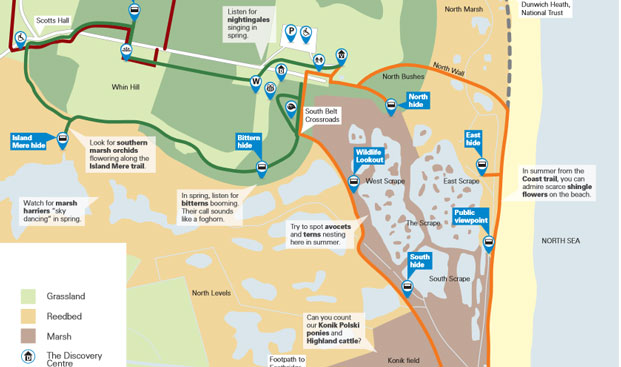
After a perfect 'full English' breakfast we headed off towards the coast again. Nowhere better than a visit to Minsmere  RSPB Nature Reserve.
The car park was quiet and not many people about. Some of the Bird Hides were still closed due to the virus. Some other areas were also closed off which was a shame.

We decided to walk along the shingle beach  to Dunwich Heath. It wasn't  easy walking at all. Walking right on the waters edge proved a little easier. But you had to be quick to avoid the incoming waves.


Dunwich Heath is a rare survival of coastal lowland heath; the Suffolk Sandlings used to form a lot of the Suffolk coast, but have mostly been developed for agriculture or built upon. The heath is mostly covered with heather, but there is also some woodland and grassland included in the reserve.
A variety of birds, animals and reptiles live on the heath. It is a particular favourite spot to see the elusive 'Dartford Warbler'. Sadly despite our efforts they remained elusive  on this particular day. Plenty of other Warblers in evidence though including the difficult to spot Cetti's Warbler.


Clifftop views from Dunwich Heath


Minsmere is in a low-lying area of the Suffolk coast approximately 24 miles (39 km) north-east of Ipswich. It is a very diverse area providing a number of important habitats,  for species such as Bitterns, Marsh Harriers, Hen Harriers, Avocets and our Old friend the Dartford Warbler.

The wetland areas include flooded lagoons  and grazing marshes provide over-wintering grounds for a variety of different waterfowl species.


The open hide at 'The Scrape was open though.  the Scrape is an artificial habitat, designed to replicate a natural saline lagoon. It is an excellent area for migrant wading birds particularly in Autumn and Summer.

On show today were; Sandwich Terns, Ringed Plovers, Little Egret, Canada Goose, Mallard, Shelduck and Redshank. Plenty of Reed, Sedge and Willow Warblers around too.


Sadly the Bittern Hide and the Island Mere hide were both out of bounds. Although I did see a Marsh Harrier from some distance as it flew past. They can often be seen hovering low over the reed beds looking for small mammals to eat. This bird or prey has an impressive four feet wing span which looks 'V' shaped when outstretched.

Of course the best time to see a Bittern is in the Spring when their 'Booming' like a foghorn can be heard. All part of the communication process during the breeding season.The reserve has one quarter of Britain's breeding population.


Minsmere really is a Birdwatcher's paradise but there are plenty of mammals to be seen too. Including a herd of about 300 Red Deer, Otters, Badgers and Water Voles. No doubt plenty of others too. We did see the Konik Ponies though, brought to Minsmere by the RSPB to help maintain our wetland habitats in good condition for wildlife.The name Konik  translates as little Polish horse. The breed was created by Polish horse-breeders to resemble, as closely as possible, the extinct wild horse of Europe, the Tarpan.  

Beach at Southwold with Pier in the distance

Leaving Minsmere we head up the coast to another of my favourite places 'Southwold'. The weather is grey and overcast but not as humid as the previous day.
There are a lot of people around and finding a car parking space is tricky. So many people have decided to stay in the UK this Summer with all the virus restrictions on traveling abroad. Those who do venture to foreign shores then run the risk of having to put themselves in quarantine for 14 days on their return.
A few hardy souls have braved the sea, while others are huddled on the beach or strolling along the promenade.

There is something particularly charming about Southwold. Almost an island, being bounded by the North Sea to the East, by the River Blyth and Southwold harbour to the South–West and by Buss Creek to the North, there is just the one road in to and out of Southwold.


Adnams Brewery
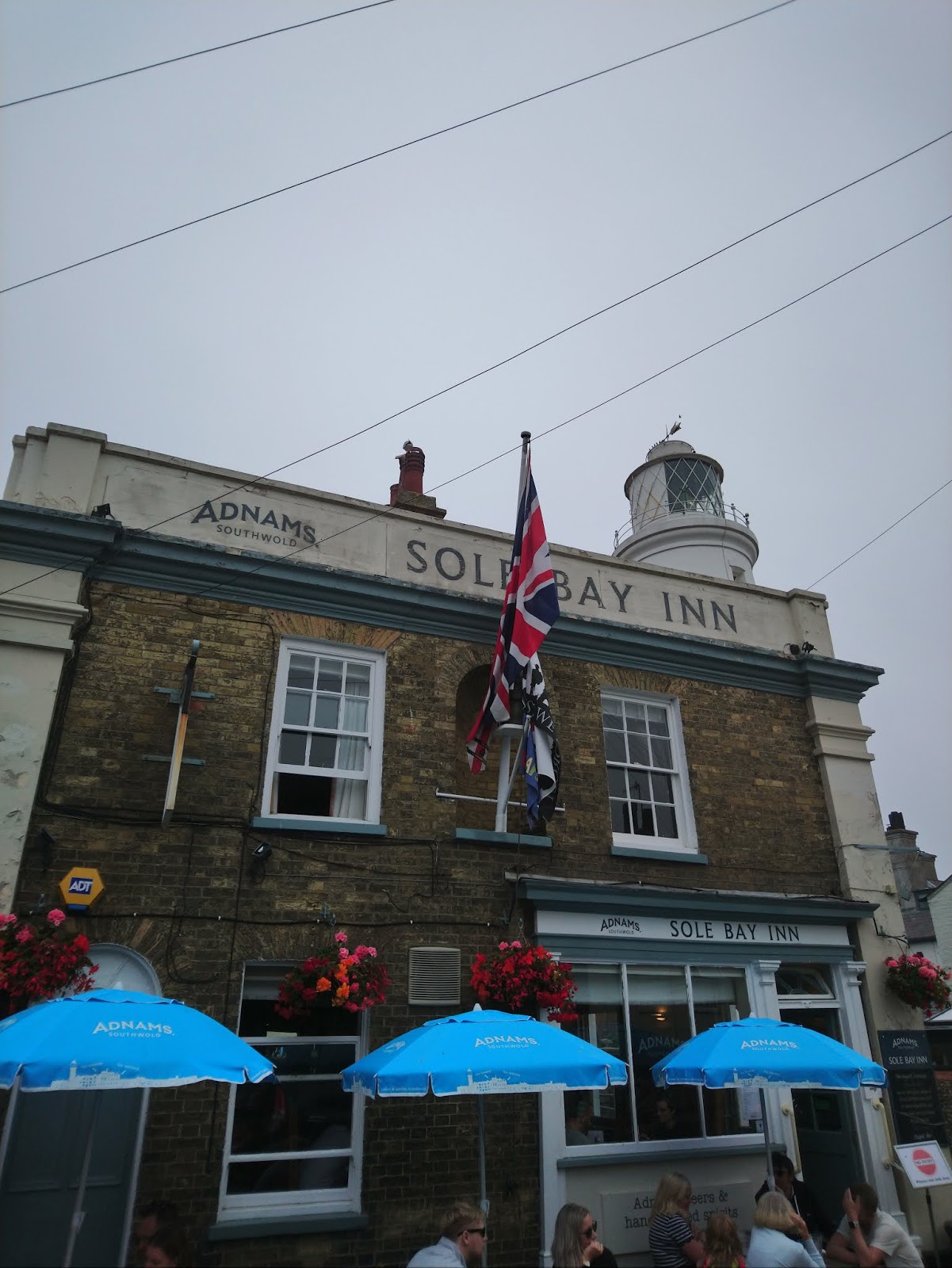
There is a lot to see and enjoy including the award-winning pier, busy harbour, cliff top cannon, working lighthouse, famous beach huts and of course Adnams Brewery. Throw in some unusual antiques shops and you have all you need for an interesting trip!

 The Lighthouse is operated by Trinity House, acting as a warning light for shipping passing along the east coast and as a guide for vessels navigating to Southwold harbour. Commissioned in 1890, and was automated and electrified in 1938.  The lamp has a range of 24 nautical miles (44 km; 28 miles).

Adnams Brewery was founded in 1872  by George and Ernest Adnams. The earliest recorded brewing on the Adnams site was in 1396 by Johanna de Corby. I am pleased to say the Adnams Southwold Bitter in the Sole Bay Inn (3.7%) was up to it's usual high standard.  


Saturday, 22 August 2020

Suffolk weekend Part1 Lowestoft and Oulton Broad


Lowestoft Pier

Our first port of call on this long weekend to Suffolk was Lowestoft. Famous for being the most easterly town and the first place to see the sunrise in the UK, it's also the birthplace of composer Benjamin Britten.
The award-winning Blue Flag beach is said to have been the inspiration for Benjamin Britten's first masterpiece. With wide golden sands, beach huts, a pier it's perfect for swimming and paddling, building sandcastles and enjoying a walk along the prom. Which is just what we did ! The weather is strange though. Extremely humid but unbroken slate grey skies above.

There are plenty of people about though enjoying the beach and the pier. A few yachts are making their way back into harbour. In the distance are a couple of  Paddle-boarders riding the surf. Its a 10 mile walk from Lowestoft to Great Yarmouth along the coast. If we had more time I would like to have had a go at that. After a brief detour through the town centre we make our way to Oulton Broad where we are going to be staying.

Location and view from our lodgings


After a bit of confusion at reception, whereby it appeared our booking was lost we finally got allocated our accommodation. It certainly wasn't what was originally intended I'm sure .When the receptionist lady asked if we minded stairs I became even more worried.....However our fears soon disappeared when we say that we had been given the whole floor of a farmhouse, complete with views of Oulton Broad .

A quick unpack and then it was time for a wander. There were good walks which ever direction we decided to go. We went towards Oulton Broad where I was promised there would be a pub or two.
There's nice views across the large expanse of water and marsh that is Oulton Broad. We pick up part of 'The Angles Way' which picks up the River Waveney and ends in Beccles.  
There are plenty of water sports going on from sailing, paddle-boarding, kayaking to kids jumping into the water. It's a busy scene that's probably been played out for centuries.


It's a lovely walk round the water, somebody is the worse for wear though. Dancing around with a near empty Brandy bottle in hand before collapsing on the bank.

We stop off at the Wherry Hotel overlooking the Broads for a well deserved drink. A pint of 'Adnams Ghost Ship' goes down extremely well indeed. It's still very humid and we had worked up a good thirst. Only time for the one unfortunately as we had to get back and ready before our inclusive three course dinner !
A good start to our trip to Suffolk. 


Tuesday, 18 August 2020

Paddleboarding (SUP) at Cransley Reservoir

When a friend of mine posted some pictures of himself Paddle-boarding I commented that It looked great fun. I also added that I would love to have a go at some stage in the future. Little did I expect him to invite me to join him a couple of days later!

I didn't have to think too long either.  It was another hot and sticky after of plus 30 degree heat and he was going  to pick me up.
The venue for the Paddle-boarding or (SUP - Stand Up Paddling) as it is also know was Cransley Reservoir.
Known locally as Three Chimneys is a lowland lake is situated in Cransley, near Kettering, Northamptonshire. 
constructed in the 1880’s to provide water for Kettering and Cransley furnaces.  It has been providing clean water for Kettering and Desborough for over 125 years. The reservoir is now privately owned and used by Cransley Sailing Club and covers approximately 75 acres .

It's only a short drive up the A43 and we have to unlock the gate at Cransley to get in. To my surprise there is nobody else on the water. 
We move further round the reservoir away from all the sailing boats to an area for Paddle-boarding.  

My friend sorts me out a board that he thinks will be suitable for the novice. I'm grateful to see that it is a little wider than his own. 
It is so hot and the water warm that only shorts and T shirts are required. Thankfully no wet suits.

He gives me some brief instructions before I am let loose. I start on my knees which is more comfortable than I expected. In fact I was more than happy to stay like that really.  


'Try standing' up I heard '...... 'Get in the starting position as though you are about to start a running race'. Even that is easier said than done... It is a massive leap of faith going from the comfort  and safety of being crouched on the board to standing up . 

But stand up I did , and stayed up. The board felt secure and didn't disappear from under me. In fact it all felt very secure and I made fairly sedate progress. 

It was a lovely feeling being out there with just the ripple of the water and the Canadian Geese for company. Perhaps I got a little too complacent as a wobble became a fully blown tumble. It was a shock to fall into the water but actually very refreshing in the humidity. The hardest part was getting back on the board from the water. The secret was to pull myself on gradually from the rear. 


Cransley Reservoir


 Once safely back on the board I managed a complete circuit of the still deserted reservoir. I even managed to pick up a bit of speed with the wind behind me. Going back against it was a completely different matter though and required some serious shoulder effort.
All was going very well until my friend shouted across ' Is that a Red Kite up there' ? ...  Once again my balance and concentration had gone and I ended  up in the wet stuff again. 
The secret it seems is not to look down or too far up , just focusing on the horizon at eye level.
It had been a great few hours , thoroughly enjoyable and something I can't  wait to have another go at.

Add caption
 

Thursday, 13 August 2020

Bob Ross Painting Experience

I have long been an admirer of the Artist Bob Ross. During lockdown the BBC have been repeating his many series of shows ' The Joy Of Painting'.
There is something very special about his landscapes,  the use of colour and the ease in which he paints.
Add to that the most friendly , kindly and calming demeanor you could ever wish to come across.

Bob used the 'Wet on Wet' technique in which the painter continues adding paint on top of still-wet paint rather than waiting a lengthy amount of time to allow each layer of paint to dry.
A typical 'Bob' painting

The show ran from January 11, 1983 to May 17, 1994. Bob was famous for his catchphrases ,, such as 'Happy little trees or clouds'. 'This is your world and it can be however you want it to be'. Perhaps most famously of all 'we don't make mistakes only happy little accidents'. Among many more. Very sadly Bob died at the age of 52 on July 4, 1995 due to complications from Lymphoma.


I have only ever dabbled in ' watercolour ' painting but really wanted to try the 'wet on wet' technique. There are various ''Bob Ross' painting workshops taking place throughout the country. So my wife very kindly booked us both in for one just over the county border in Leicestershire.

I will admit to some nerves beforehand. Although 'Bob' makes the style seem very achievable I knew it wasn't going to be easy.

Our tutor lady showed us many different completed paintings and asked us to select one that would act as our template. After a bit of deliberation we settled on the one on the left.
I really wanted to include a mountain , some water and trees.

We settled ourselves outside in the garden, under a gazebo on what was a scorching hot sunny day. All paints and equipment provided  and the canvas set on the easel.

 First up was to coat the canvas in quite a thick layer of 'Liquid White' to form a base covering. Then it was a case of filling in the sky colour. I had opted to go with the northern lights type of sky blending into the blue. Marina was going for a more Summer approach with wispy clouds.

Next step was to use the palette knife and very roughly edge out some mountain shapes. Just simple triangles initially that could be worked on and fine tuned. It was tricky having never used the palette knife before but some basic mountain shapes gradually emerged. Adding shadow then provides further definition. Distant tree shapes were added using the dark blue on a 1" brush and then blurred to give the illusion of distance. A further row of nearer bushes were then added . Again at this stage just basic dark shapes. Blue is added quite broadly for the water using the 2" brush , leaving a gap for the light reflection.It is then just a case of building up the picture adding in layers to create perspective.

Almost finished
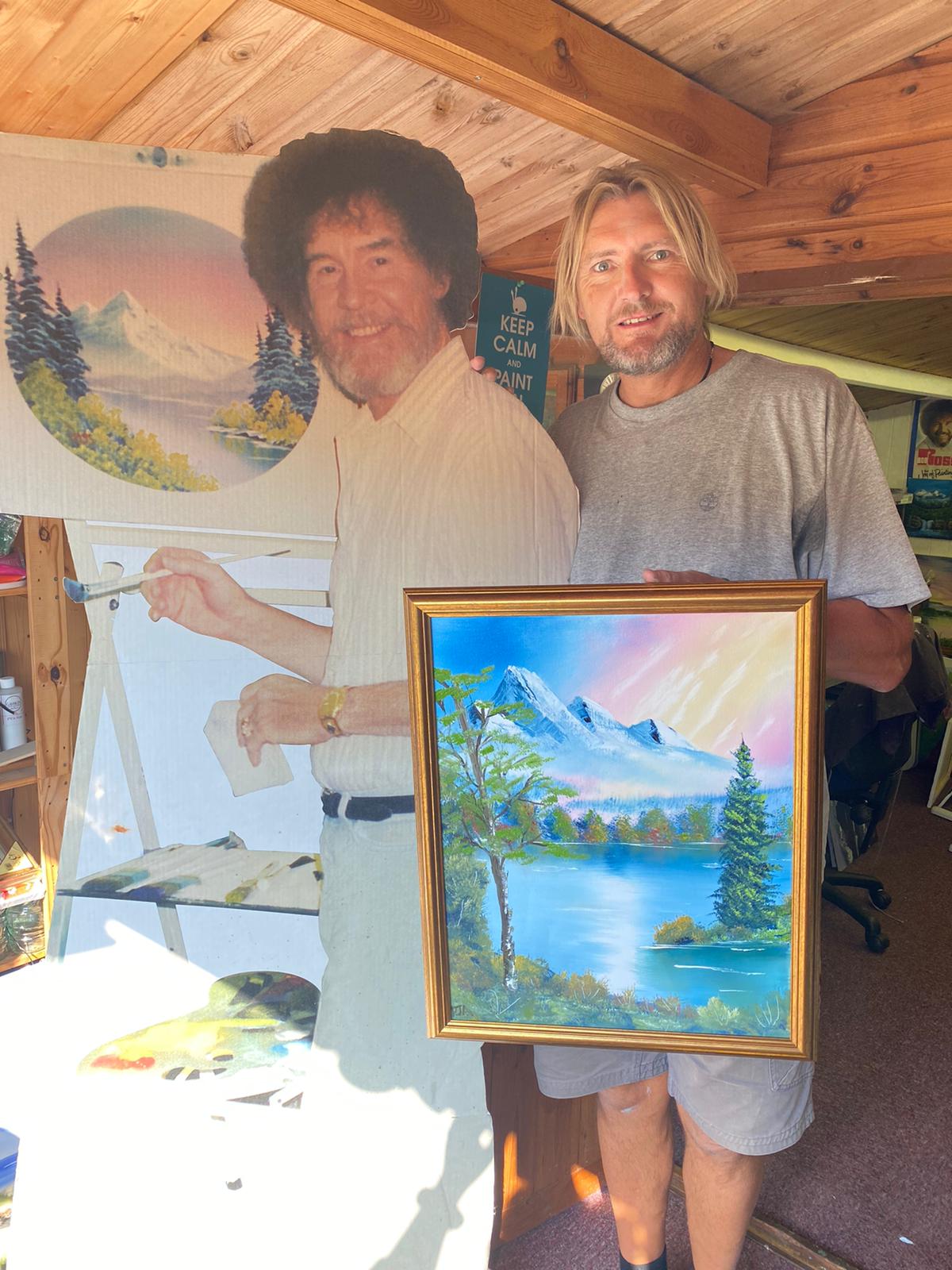
With the man himself


I enjoyed adding in the little island jutting out with the pine tree. Again building up from a dark basic shape and adding in the colour. The foreground added even more perspective and allowed me to put in some bushes and vegetation. The hardest part and the bit I was dreading was adding in a big silver Birch tree. This was mostly done with the palette knife and was a real leap of faith...
I'm not totally happy with it but it's ok for a first attempt.
It was a really enjoyable experience and think the 'Old Master' himself would have approved.
Hopefully the first of many as I hope to continue going forward. 

Peter's finished work
Marina's finished work

Thursday, 6 August 2020

Whaddon Chase -Swans Way (5)

Field Day

Our starting point today is the village of Whaddon.  A perfect day for walking, with a dry day forecast and blue skies withlots of fluff happy white clouds. Today is going to be a lot different from the previous two legs of The Swan's Way around Milton Keynes. Prepare yourself for plenty of photos of large wide open spaces and maybe the odd sheep?

Heading out of the village we walk towards Thrift Wood passing Chase Farm and Crabtree Farm.  We go over Railway Bridge 11 and take a small route along a fairly busy 'B' road. Below is a disused railway line that seems to be in the process of being made for use again?

A bit of further investigation reveals that it is part of 'East West Rail Phase 2'. This involves upgrading and reconstructing underused and mothballed sections of the railway linking the Great Western, Chiltern, West Coast and Midland main lines north of London and providing strategic east-west route connecting key centres .Eventually it will link Oxford to Cambridge  and beyond. 

There is a nice little Aqueduct across the track (Also known as The Salden Water Trough). This is situated 430 metres west of The Swan's Way.
Sadly to allow for the passenger trains the Aqueduct will have to be removed.


Salden Water Trough (Aqueduct)


Unusual Waymark sign


We passed an unusual waymark post that marked the Millennium and the creation of the National Cycle Network. Deep in the undergrowth as we contemplated trying to climb over to get a closer look at the Aqueduct . We stumbled across two random sculptures, of what seems to be some sort of funghi ?
The looked quite nice though and were well worthy of a photograph each.


Certainly more interest already than I had anticipated. I suppose that is the thing about these walks there is always something there if you look hard enough. As we reached the furthest point and headed homewards we encountered the lovely little village of  Little Horwood in the Vale of Aylesbury district. The television gardener Percy Thrower of 'Blue Peter' was born here at Horwood House.
Behind the Church of St Nicholas is possibly the most uneven football pitch I have ever seen!
It was actually being mowed by 2 x unattended  robotic lawnmowers, not quite what you would expect....

St Nicholas Parish Church


We continue over a style into rich golden fields of wheat rocking gently in the warm sunshine. It's a perfect English Summers day far away from all the chaos and madness going on in the world.
Beautiful open expanses of greenery are topped only by an oasis of blue water shimmering and inviting . On this occasion it's only little Archie who takes the plunge into the cooling waters. was more than slightly tempted myself as well !


'Archie'


'Peace and Calm'


The water break has provided a welcome interlude, especially for a 're-vitalised 'Archie' .

'Whaddon Chase' has been for centuries the site of Royal hunting grounds. It is also designated an area of 'Special Landscape Interest'.


For the first time today we have a large panoramic landscape to enjoy.
There is a little bit of interest from the odd sheep and another occasional walker. Otherwise it is virtually deserted as we head back towards our starting off point. Ending with a different view of St Mary's Church Whaddon.


St Mary's Church Whaddon


Gary Numan - Northampton Roadmender (Night 2)

Tour Bus parked up Popped into town at lunchtime and called past the Roadmender just to see who was about. Two people (Ellie and Graham) wer...