Sunday, 1 November 2015

Autumn Colour and Carpetbaggers


 It was a nice sunny Autumn Sunday afternoon and just about perfect for a wander in thee countryside. Using a local map we set off from the car park at Draughton village next to the Brampton Valley Way. The route would criss-cross the old disused railway line that runs to Market Harborough initially taking us up to the village of Maidwell.

Always a favourite time of the year for me as the leaves begin to lose the fight but their farewell provides a fantastic array of colour before the ground takes them. The journey continued uphill and the hum of the ever busy A14 (M1-A1 link road) which itself rises to a pounding roar as we navigate the perimeter fence.


Autumn Leaves
Walking away from the A14 we soon came to the Carpetbagger Aviation Museum at Harrington. Operation Carpetbagger was a general term used for the aerial supply of weapons and other supplies to resistance fighters in France, Italy and the Low Countries by the U.S. Army Air Forces that began on 4 January 1944.
 

 In late 1943, the 22nd Anti-Submarine Squadron of the Eighth Air Force was disbanded at RAF Alconbury and its aircraft used to form the 36th and 406th Bomb Squadrons. These two squadrons were placed under the provisional 801st Bomb Group at RAF Harrington at the beginning of 1944 and the first "Carpetbagger" missions were carried out. In April 1944, the group moved to RAF Harrington (Station 179), a more secluded and thus more secure airbase.


 It's a cracking little museum with photographs, maps and exhibits and unique film footage describing the secret missions flown by the Harrington Airmen. Other displays show the vast secret agent and supply network masterminded by the British Special Operations operated from RAF Tempsford. Alongside the Carpetbagger Aviation Museum is the old Paymaster General's Nissen Hut and the Northants Aviation Museum. This museum contains the remains of recovered World War II aircraft including parts of a Lancaster, Hurricane, Wellington, Tiger Moth, B17 Flying Fortress, B24 Liberator and other WWII aircraft.


Leaving the museum we walked back along the old runway which eventually took us back in the direction of the Brampton Valley Way. Lots of unusual funghi on display as you would expect at this time of the year. With the clocks going back last night the afternoon was drawing in quickly and soon got cold. A really good walk of about 5 and a half miles!

Friday, 2 October 2015

Walton Hall

Set in 65 acres of grounds in the heart of Shakespeare country with a river 'Walton Hall' was our location for a one night break. A four-star hotel, split into two sections. The Hall a seventeenth century Grade II listed building (pictured) and the hotel. The Walton Hall is a 16th-century country mansion at Walton, near Wellesbourne, Warwickshire, once owned by Lord Field and the entertainer Danny La Rue. La Rue spent more than £1million on the purchase and restoration of the country house hotel, and sold it in 1983. Controversy with the two Canadians who had bought it and agreed to retain La Rue's name on it led to a police investigation where La Rue eventually was cleared of any suspicion but discovered he had lost more than £1million. In the mid-20th century, the property was owned by the M.O.D. and used as a training camp for Army Cadets prior to being sold to Lord Field, who restored the main building to be used as a family home. Plenty to do apart from walking the beautiful grounds as there is a full gym, swimming pool and health suite. So definitely worked up an appetite before dinner was served. The next day after a bit of panic when I lost my mobile phone and had to return back to the hotel where it was found was spent in Stratford Upon Avon. Surprisingly I was made Mayor for the day !

Saturday, 19 September 2015

Falmouth 2015

It was a very early start to get down to Cornwall as Marina was picking up her new car. While she was doing that I decided that it was a good opportunity to acquaint myself with the hotel. Unfortunately the room wasn't ready to I decided to check out the 'Tribute' Ale in the bar while awaiting her return. I am pleased to say it was as good as I remembered. Falmouth is famous for its harbour. Together with Carrick Roads, it forms the third deepest natural harbour in the world, and the deepest in Western Europe. It is has been the start or finish point of various round-the-world record-breaking voyages, such as those of Sir Francis Chichester and Dame Ellen MacArthur. During World War II the United States Navy had a large base in Falmouth harbour as well as an army base in the town. I felt give it's Maritime history that it was important to look the part. No trip to Cornwall would be the same without a visit to Harlyn Bay. The beach was exrtemely busy considering it was quite an overcast day. Another place always worth a visit is Padstow which always seems to be busy. Lots of people around the harbour edge with their crab lines. Judging by the creatures captured in their buckets they were doing very nicely too. On the way home we called at Bosveal and walked down to the beach at Durgan alongside the Helford Estuary. It is right next to the gardens at Glendurgan a sheltered and exotic valley that leads to the Helford River.

Saturday, 5 September 2015

Oxford Birthday - Part 2

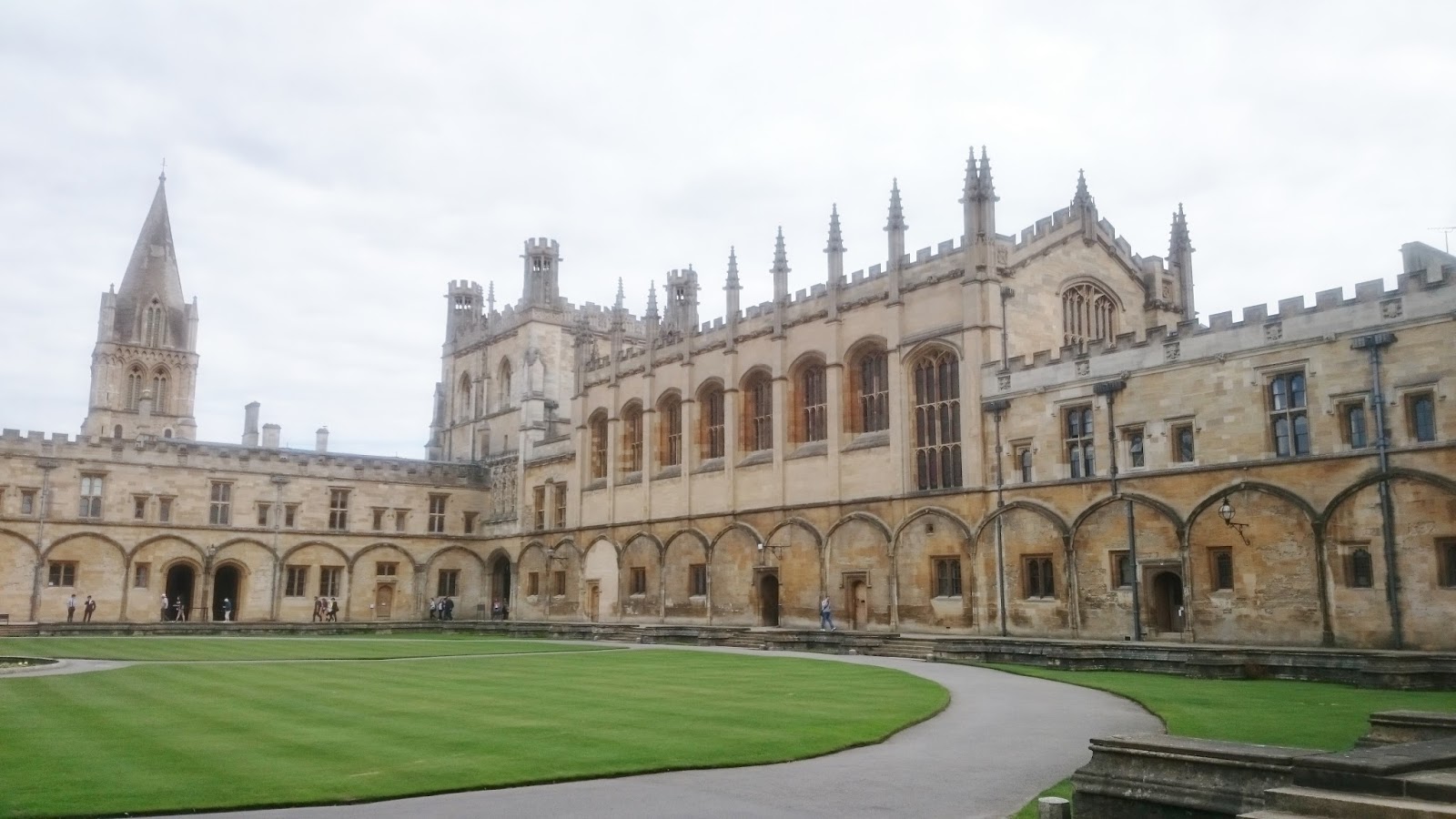
The Bridge of Sighs (Hertford Bridge) is not to be confused with the Venetian equivalent. Hertford Bridge was never intended to be a replica of the Venetian bridge, and actually bears a closer resemblance to the Rialto Bridge in the same city. It connects two parts of Hertford College over New College Lane. We decided to walk down to the river taking in Christ Church College on the way. It is the second wealthiest Oxford college and the largest and is famed for producing 13 British Prime Ministers. Down on the river The Oxford City Royal Regatta was taking place. It is a historic and popular regatta held on the Isis - a beautiful stretch of the River Thames, and the scene of centuries of rowing history. The races take place over a 1000m course on Saturday and a 500m sprint on Sunday. Several hundred competitors take part in a range of events including British Rowing events (for Juniors, Novices, Seniors and Masters) and mixed crew events. I really wanted to see the inside of one of the colleges and Magdalen was the one we happened upon. Magdalen College was founded in 1458 by William of Waynflete, Bishop of Winchester. Magdalen stands next to the River Cherwell and has within its grounds a deer park and Addison's Walk. The large, square Magdalen Tower is an Oxford landmark, and it is a tradition, dating to the days of Henry VII, that the college choir sings from the top of it at 6 a.m. on May Morning. Built to be spectacular at 44m (144 ft) The Magdalen Tower is the highest point in the 'City of Dreaming Spires'. Described by Oscar Wilde as 'Magdalen's tall tower tipped with tremulous gold'. A well earned pint was had in 'The Eagle and Child' public house. Owned by St. John's College, Oxford, the pub had been part of an endowment belonging to University College since the 17th century. It has associations with the Inklings writers' group which included J. R. R. Tolkien and C. S. Lewis. The beer was good but there was a disappointing amount of memorabilia for the literary greats who made the place so famous.

Tuesday, 1 September 2015

Oxford - Birthday

What better way to spend a birthday than In the "city of dreaming spires",where academia takes centre stage. The city is known worldwide as the home of the University of Oxford. The term 'dreaming spires' was coined by one of the great Victorian poets Matthew Arnold (the third great Victorian poet after Tennyson and Browning). Our first stop was the historic'Covered Market'. Oxford has had a market probably since the late ninth century, when the town was fortified, or perhaps earlier, but the first written reference is found in twelfth century records. It started at Carfax (the main crossroads) and spread along adjoining streets. The Covered Market was started in response to a general wish to clear ‘untidy, mess and unsavoury stalls’ from the main streets. John Gwynn architect of Magdalen Bridge, drew up the plans and designed the High Street front with its four entrances. Today you can still buy a great selection of meat and fish here, and numerous cheeses, . Fruit and vegetable stalls still make colourful displays but much of the produce is now imported from all over the world. In the old days it was full of game hanging from the ceilings including, geese , pheasants, hares, rabbits and even the odd boars head! You can't go far without encountering a College, just along the road from the Indoor Market is Brasenose College. It was founded in 1509, with the College library and current chapel added in the mid-seventeenth century. Its name is believed to derive from the name of a brass or bronze knocker that adorned the hall's door. Among the best known living Brasenose alumni are Prime Minister David Cameron, the comedian Michael Palin, Mybe that should be the other way round? The Bodleian Library the main research library of the University of Oxford, is one of the oldest libraries in Europe. By the late 18th century, further growth of the library demanded more expansion space. In 1860, the library was allowed to take over the adjacent building, known as the Radcliffe Camera. In 1861, the library’s medical and scientific collections were transferred to the Radcliffe Science Library.

Sunday, 9 August 2015

Minsmere and Southwold

First visit of the year to Minsmere home of BBC tv's 'Springwatch' base at the RSPB Reserve. A wet start it was too not helped by leaving my walking trousers back at the B&B. Thankfully the rain did ease off a little after a pitstop for a warming hot chocolate , after all it was only the end of July ..... The reserve is located right on the North Sea coast approximately 24 miles (39 km) north-east of Ipswich. The area provides a number of important habitats, including for species such as bitterns, marsh harriers, hen harriers, avocets and Dartford warblers.The grazing marshes to the south of the Minsmere Levels provide over-wintering grounds for a variety of different waterfowl species. The wind really got up and it was a bleak scene along the beach route. The marshes along the Minsmere River were drained for agricultural use in the 1840s but reflooded during the Second World War to defend against invasion along the East Anglian coast. A number of military defences were built in the area, including pill boxes, anti-tank blocks and barbed wire defence lines. The Minsmere RSPB reserve was established in 1947, making use of the wetland habitats reintroduced by wartime flooding. The chances of spotting any decent birdlife were quite remote as not the best time of the year along with the strong onshore winds. Although Marina is adamant that she did see a Bittern in flight as we entered one of the hides. It didn't really matter though as it was good to walk through the reed beds and then the woodland heath. We saw the wooden studio that is used for Springwatch recording now all boarded up. By late afternoon the wind had dropped completely and the clouds had dispersed completely. The best part of the day you might say. We wandered back up to the beach area which was very different to this morning. We drove a few miles up the coast to the quintessentially English seaside resort of Southwold. Located on the North Sea coast at the mouth of the River Blyth within the Suffolk Coast. First stop was fish 'n' chips on the Pier which went down very well. Southwold Pier was built in 1900. At 247 metres (810 ft) it was long enough to accommodate the Belle steamers which carried trippers along the coast at that time. In World War II, it was weakened by two breaches, and in 1955 a large section was destroyed by a gale. The pier was entirely rebuilt and restored in 2001 and is now about 190 metres (620 ft) long. Walking along the promenade it is impossible to ignore the colourfuly decorated beach huts that line the sea front. Apparently one was recently on the market for princely sum of £120,000 .... Adnams Brewery was established in the town by George and Ernest Adnams in 1872 with the purchase of the Sole Bay Brewery which had been established in 1818. In 2011 it received the Good Pub Guide Brewery of the Year Award. It would have been rude not to have had a pint in the local pub 'The Sole Bay Inn'. Emerging from behind the pub is the 'Lighthouse'. Southwold lighthouse was commissioned in 1890 and automated and electrified in 1938.It stands as a prominent landmark in the centre of the town and is a Grade II listed building. It is 31 metres (102 ft) metres tall, standing 37 metres (121 ft) metres above sea level. It is built of brick and painted white and has 113 steps around a spiral staircase.

Magnum - The Roadmender, Northampton

  Early Birds have arrived What a time to be alive! Having recently seen one of my favourite bands 'Marillion' in Brighton, it is no...